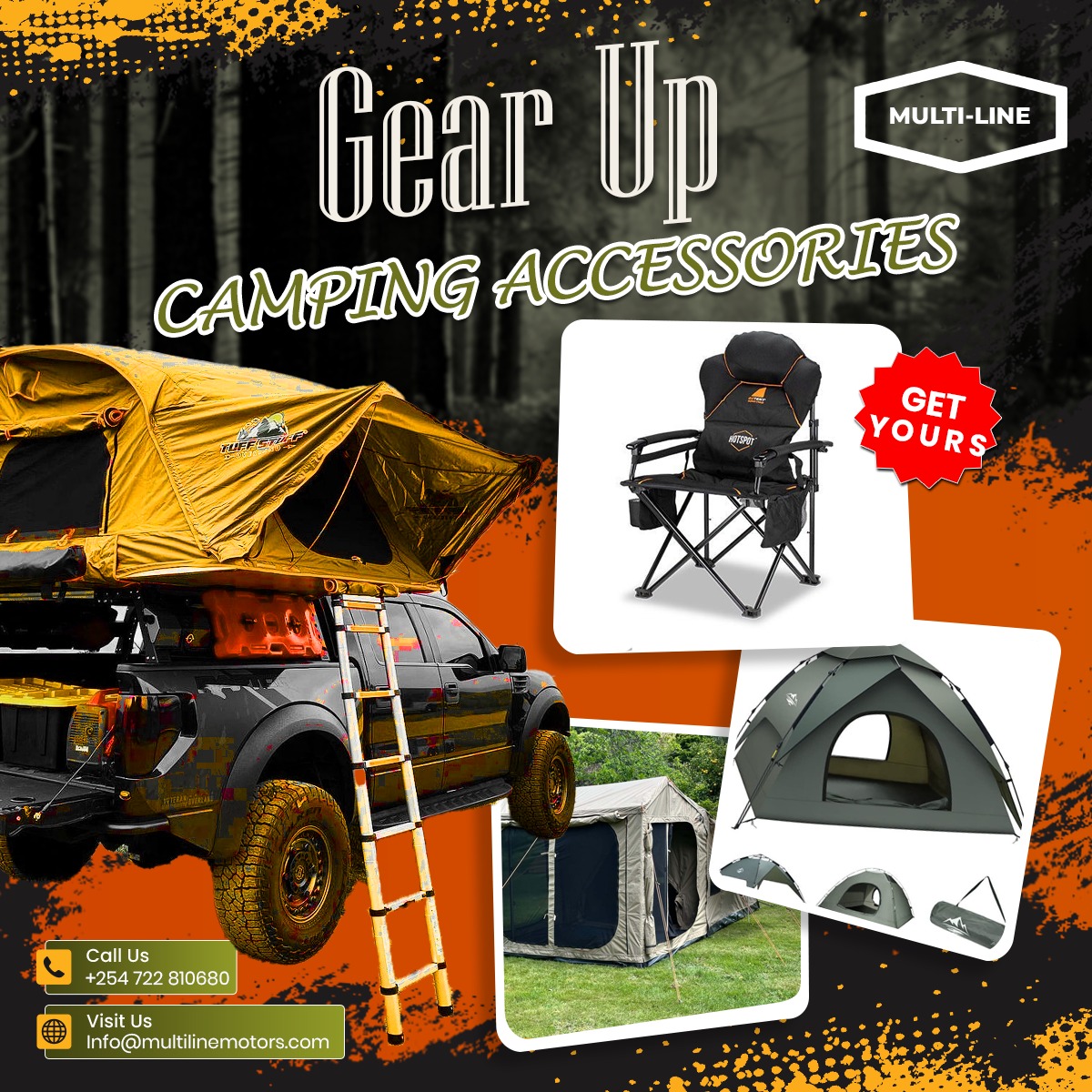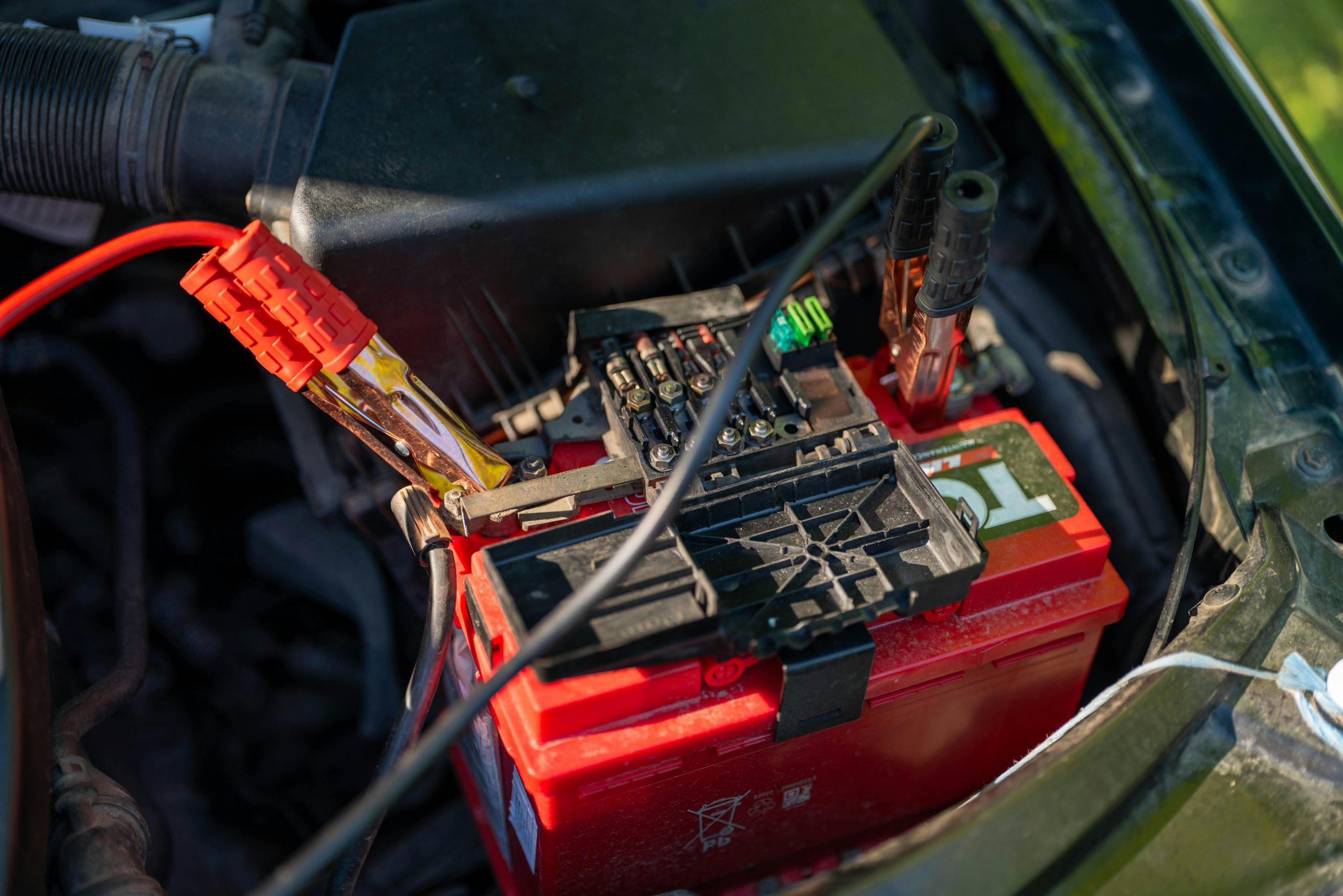
You have a fridge to keep drinks cold. You have lights to see at night. You have phones, cameras, and maybe a winch to power. But your vehicle has only one battery – and it was designed to start the engine, not to run a campsite.
Wake up in the bush after a single night, and that fridge could leave you with a dead starter battery and no way to go home.
That is why a dual battery system is not a luxury for Kenyan overlanders. It is essential.
Whether you are camping at the WRC Safari Rally in Naivasha, overlanding to Lake Turkana, or spending a long weekend in the Maasai Mara, a properly installed dual battery system lets you enjoy the adventure without worrying about a silent engine in the morning.
For more on preparing your vehicle for overlanding, read our Safari Rally 4×4 Preparation guide.
In this guide, we cover everything you need to know about dual battery systems in Kenya: what they are, why you need one, the components required, costs, installation mistakes to avoid, and where to get it done right in Nairobi.
Table of Contents
-
What Is a Dual Battery System?
-
Why You Need One in Kenya
-
Dual Battery Benefits by Kenyan Region
-
VSR vs DC-DC Charger – Which One for Your Vehicle?
-
AGM vs Lithium vs Lead-Acid – Auxiliary Battery Types
-
Complete System Cost Breakdown
-
Installation Mistakes That Leave You Stranded
-
Best Dual Battery Accessories
-
Where to Buy and Install in Nairobi
-
Maintenance Tips
-
Frequently Asked Questions
-
Final Verdict
What Is a Dual Battery System?
A dual battery system is exactly what it sounds like: two batteries working together but separated so they do not interfere with each other.
| Component | Role |
|---|---|
| Starter Battery | Used only to start the engine. Protected and never drained by camping gear. |
| Auxiliary (House) Battery | Powers your fridge, lights, phone chargers, water pump, inverter, and other accessories. |
| Battery Isolator (VSR or DC-DC) | Automatically charges the auxiliary battery when the engine is running, but prevents the fridge from draining your starter battery when parked. |
Think of it as separating your “starting power” from your “camping power.” The two batteries live in the same vehicle but work independently.
For basic battery care, check out our Car Battery Maintenance guide.
Why You Need One in Kenya
Kenya’s overlanding and camping scene has grown rapidly. More drivers are installing fridges, light bars, and inverters. But most do not realize how quickly these accessories drain a single battery.
How fast does a fridge drain your battery?
| Fridge Size | Average Power Draw | Time to Drain 100Ah Battery |
|---|---|---|
| 40L fridge | 0.8 – 1.2 amps/hour | 4 – 5 days (with dual battery) |
| 60L fridge | 1.2 – 1.8 amps/hour | 2 – 3 days |
| 80L fridge + lights + phone charging | 2.5 – 4 amps/hour | 1 – 2 days |
Without a dual battery system, your starter battery will be dead by morning – especially on hot nights when the fridge runs harder.
Specific Kenyan scenarios where a dual battery system is essential:
-
Safari Rally Kenya camping – 4 to 5 days in Naivasha with no power hookups. Your fridge runs non-stop.
-
Overlanding to Lake Turkana or Marsabit – Remote campsites, no shops, no jump-starts. You cannot afford a dead battery.
-
Weekend trips to the Maasai Mara – Even two nights with a fridge can kill a standard battery.
-
Running a winch or air compressor – These draw huge current. A dual battery setup isolates the starter battery so you can still drive home after a recovery.
-
Fleet and work vehicles – Survey trucks, safari vans, and mobile workshops need reliable power for equipment without risking the vehicle starting.
A fridge running overnight drains a single battery in 6–12 hours. A dual battery system lets you camp for 3 days or more – and still start your engine.
For official Safari Rally event information, visit the WRC Safari Rally Kenya website.
Dual Battery Benefits by Kenyan Region
Different regions in Kenya present unique power challenges. Here is how a dual battery system helps across the country.
For Northern Kenya (Turkana, Marsabit, Isiolo):
Extremely remote, no services for hundreds of kilometers. A dual battery system with solar backup is essential. You cannot rely on jump-starts from strangers. Best setup: Lithium battery + DC-DC charger + solar.
For Safari Rally (Naivasha, Rift Valley):
Crowded campsites, dusty conditions, 4-5 day events. Your fridge runs constantly. Many vehicles without dual systems end up with dead batteries by day two. Best setup: AGM battery + VSR (budget) or Lithium + DC-DC (premium).
For Maasai Mara and Southern Loop:
Corrugated roads shake batteries loose. Vibration destroys poorly mounted batteries within months. A dual battery system with a secure tray and quality shocks (for the battery) prevents failure. Best setup: AGM battery with heavy-duty mounting.
For Coastal Region (Mombasa, Kilifi, Lamu):
High humidity and salt air corrode terminals. Heat strains battery life. A dual battery system with sealed AGM or lithium batteries and corrosion-resistant terminals lasts much longer than standard batteries.
For Central Highlands (Nyeri, Nanyuki, Aberdares):
Cold nights reduce battery capacity. Lithium batteries perform better than AGM in low temperatures. If you camp at high altitude, invest in lithium.
For camping gear recommendations for these regions, see our OZTENT Tent Comparison guide.
VSR vs DC-DC Charger – Which One for Your Vehicle?
The heart of any dual battery system is the isolator – the device that decides when and how the auxiliary battery gets charged. There are two main types available in Kenya.
| Feature | VSR (Voltage Sensitive Relay) | DC-DC Charger |
|---|---|---|
| How it works | Connects batteries when voltage is high (engine running). Disconnects when voltage drops. | Boosts and regulates voltage to charge auxiliary battery properly, regardless of alternator output. |
| Best for | Older vehicles (pre-2015) with simple alternators | Modern vehicles with smart alternators (variable voltage for fuel economy) |
| Charge speed | Fast – uses full alternator current | Moderate – limited to charger rating (20A, 25A, 40A) |
| Works with lithium batteries? | No – can damage lithium | Yes – most have lithium profiles |
| Can connect solar panels? | No | Yes (many models have built-in solar input) |
| Price range (KES) | 3,000 – 8,000 | 12,000 – 25,000 |
Our recommendation for Kenyan drivers:
-
Older 4×4 (Land Cruiser 70 series, older Hilux, Defender pre-2015): A good quality VSR is simple, reliable, and cost-effective.
-
Modern vehicle (Land Cruiser 200/300, Prado, Ford Ranger, Hilux GD-6, Nissan Patrol 2020+): Spend the extra money on a DC-DC charger. Smart alternators do not provide constant voltage, and a VSR may never fully charge your auxiliary battery.
Many modern vehicles have “smart alternators” that drop voltage to save fuel. A VSR sees this drop and disconnects your auxiliary battery before it is fully charged. A DC-DC charger solves this problem completely.
For more information on smart alternators, refer to the AA Kenya technical guides.
AGM vs Lithium vs Lead-Acid – Auxiliary Battery Types
The auxiliary battery is where you store power for your fridge and accessories. In Kenya, you have three main choices.
| Battery Type | Lifespan | Weight (100Ah) | Cost (KES) | Pros | Cons |
|---|---|---|---|---|---|
| Lead-Acid (Flooded) | 2 – 3 years | 25 – 30 kg | 10,000 – 15,000 | Cheapest option. Widely available. | Needs ventilation. Spills acid. Not for deep cycling. |
| AGM (Absorbent Glass Mat) | 4 – 6 years | 25 – 30 kg | 22,000 – 35,000 | Sealed. No maintenance. Good deep cycle performance. | Heavy. Slower charging than lithium. |
| Lithium (LiFePO4) | 8 – 10+ years | 12 – 15 kg | 45,000 – 85,000 | Very lightweight. Fast charging. 100% usable capacity. Lasts 10+ years. | Expensive upfront. Requires lithium-compatible DC-DC charger. |
Our recommendation for most Kenyan overlanders:
-
Budget build: AGM battery (100Ah) + VSR or basic DC-DC charger. Reliable, affordable, and proven.
-
Premium build: Lithium battery (100Ah) + lithium-compatible DC-DC charger. Saves weight (critical for roof-top tent users and overlanders), charges faster, and lasts much longer.
A lead-acid battery should only be discharged to 50% of its capacity. A lithium battery can be discharged to 100% without damage. This means a 100Ah lithium battery gives you the same usable power as a 200Ah lead-acid battery – at half the weight.
For tyre pressure management while carrying heavy loads, see our Tyre Pressure Guide for Kenya.
Complete System Cost Breakdown (Kenya, 2026)
Here is a realistic cost breakdown for a dual battery system installed in Nairobi. Prices include VAT and are estimates from local suppliers including Multiline Motors.
| Component | Budget Option (AGM + VSR) | Premium Option (Lithium + DC-DC) |
|---|---|---|
| Auxiliary Battery (100Ah) | KES 22,000 – 28,000 | KES 55,000 – 80,000 |
| Battery Isolator (VSR or DC-DC) | KES 4,000 – 7,000 (VSR) | KES 14,000 – 22,000 (DC-DC) |
| Battery Tray (vehicle-specific) | KES 3,000 – 6,000 | KES 3,000 – 6,000 |
| Cabling (tinned copper, 16mm² – 35mm²) | KES 4,000 – 8,000 | KES 4,000 – 8,000 |
| Fuses, Holders, Circuit Breakers | KES 2,000 – 4,000 | KES 2,000 – 4,000 |
| Installation Labour (Nairobi) | KES 3,000 – 6,000 | KES 4,000 – 7,000 |
| Total Estimated Cost | KES 38,000 – 59,000 | KES 82,000 – 127,000 |
Additional costs if adding solar later:
-
Solar charge controller (PWM vs MPPT) – KES 3,000 – 12,000
-
Folding solar panel (100W – 200W) – KES 8,000 – 20,000
Pro Tip: Buy the complete system (battery, isolator, cables, tray) from one supplier and have them install it. This usually saves 10–15% compared to buying components separately.
Installation Mistakes That Leave You Stranded
We have seen too many DIY dual battery installations fail on Kenyan roads. Here are the most common mistakes – and how to avoid them.
Mistake #1: Using the wrong cable size
Thin cables cause voltage drop. Your auxiliary battery never fully charges. Your fridge shuts off early.
-
Solution: Use 16mm² cable for short runs (under 1.5m). Use 25mm² or 35mm² for longer runs from the engine bay to the boot.
Mistake #2: No fuse at the starter battery terminal
A chafed cable rubbing against metal can cause a fire. The fuse is your only protection.
-
Solution: Install a MIDI or ANL fuse within 15cm of the starter battery positive terminal.
Mistake #3: Mounting the battery loosely
Vibration destroys internal plates in lead-acid and AGM batteries within months.
-
Solution: Use a proper battery tray with a secure hold-down strap. Do not rely on bungee cords or ratchet straps.
Mistake #4: Mixing battery types without the right isolator
Connecting a lithium battery to a simple VSR will damage both the battery and your alternator.
-
Solution: If you choose lithium, you must use a lithium-compatible DC-DC charger.
Mistake #5: Installing in an unventilated space (lead-acid only)
Lead-acid batteries produce hydrogen gas when charging. In a sealed boot or cabin, this is dangerous.
-
Solution: Use AGM or lithium inside the vehicle. Only use lead-acid under the bonnet or in a well-ventilated tray.
The most common failure we see in Nairobi is loose battery mounts and missing fuses. Do not skip these. They cost very little but prevent fires and destroyed batteries.
For electrical safety standards, refer to the Kenya Bureau of Standards (KEBS).
Best Dual Battery Accessories
Once your dual battery system is installed, these accessories make it even more useful.
| Accessory | Purpose | Estimated Cost (KES) |
|---|---|---|
| Battery Monitor (Voltage & Capacity) | Shows exactly how much power remains. No more guessing. | 3,000 – 8,000 |
| Solar Charge Controller | Allows you to add a solar panel later. MPPT is more efficient than PWM. | 3,000 – 12,000 |
| Folding Solar Panel (100W – 200W) | Recharges your battery while parked. Perfect for 3+ day camps. | 8,000 – 20,000 |
| Heavy-Duty Anderson Plugs | Quick-connect for portable fridges, solar panels, or jump-starting another vehicle. | 500 – 1,500 per plug |
| Waterproof Fuse Block | Distributes power safely to multiple accessories (fridge, lights, USB outlets). | 2,000 – 5,000 |
| 12V USB & Cigarette Socket Panel | Charges phones, tablets, cameras, and drones. | 1,500 – 3,500 |
For air system tools to manage your tyres on long trips, check out our Air Systems product range.
Where to Buy and Install in Nairobi
At Multiline Motors Limited, we stock everything you need for a reliable dual battery system.
What we offer:
-
AGM and Lithium auxiliary batteries (100Ah and 120Ah in stock)
-
DC-DC chargers from Victron and other trusted brands
-
VSR isolators for older vehicles
-
Tinned copper battery cable, lugs, and fuse holders
-
Vehicle-specific battery trays for Toyota, Ford, Nissan, and Isuzu
-
Professional installation by experienced auto electricians
Why choose Multiline Motors:
-
We understand modern vehicles with smart alternators
-
We provide a wiring diagram specific to your vehicle
-
We offer a warranty on parts and labour
-
We are a one-stop shop – tyres, batteries, camping gear, and repairs under one roof
Contact us:
-
Phone: +254 722 830 802
-
Email: info@multilinemotorsltd.com
-
Location: Baba Dogo Road, Nairobi
-
Website: https://multilinemotors.com
Pro Tip: Call or WhatsApp us before you visit. Tell us your vehicle model and what you plan to power (fridge size, lights, etc.). We will have the right components ready for you.
Visit our Contact page for directions and opening hours.
Maintenance Tips for Your Dual Battery System
Even the best system needs occasional care – especially on Kenyan roads.
Monthly checks:
-
Inspect battery terminals for corrosion. Clean with baking soda and water if needed.
-
Check all cable connections are tight.
-
Verify the battery monitor (if installed) shows normal voltage.
After every off-road trip:
-
Inspect cables for chafing against metal brackets or body panels.
-
Check the battery is still securely mounted.
-
Test the isolator – with the engine running, the auxiliary battery voltage should rise to 13.8V – 14.4V.
Every 6 months:
-
For AGM batteries, perform an equalisation charge (if your charger supports it).
-
For lithium batteries, check the battery management system (BMS) is functioning.
When to replace:
-
AGM batteries: 4–6 years or when capacity drops below 70% of new.
-
Lithium batteries: 8–10+ years – you will probably sell the vehicle first.
For battery terminal cleaning tips, see our Car Battery Maintenance guide.
Frequently Asked Questions
Q: Do I really need a dual battery system if I only camp for one night?
A: Possibly not. For a single night with a small 40L fridge, a healthy starter battery might survive. But it is a risk. In hot weather, even one night can drain your battery below starting voltage. A dual battery system gives you peace of mind.
Q: Can I install a dual battery system myself?
A: Yes, if you are comfortable with basic electrical work and understand how to safely route cables and install fuses. However, we strongly recommend professional installation for modern vehicles with smart alternators. One wiring mistake can damage your alternator or ECU.
Q: How long does installation take at Multiline Motors?
A: Most installations take 2–4 hours, depending on the vehicle and complexity. Same-day service is usually possible if you arrive early.
Q: Will a dual battery system fit in my vehicle?
A: In most 4×4 vehicles (Land Cruiser, Hilux, Prado, Ranger, Patrol), there is space under the bonnet for a second battery tray. Some vehicles require the auxiliary battery to be mounted in the boot or under a seat. We will advise based on your specific vehicle.
Q: Can I add solar panels later?
A: Yes, and we recommend planning for it. If you buy a DC-DC charger with a built-in solar input (Victron and other brands offer this), adding solar later is as simple as plugging in a panel.
Q: What size auxiliary battery do I need for my fridge?
A: As a rule of thumb: 100Ah battery for a 40–60L fridge (2–3 days). 120Ah–150Ah for a larger fridge or longer trips. Lithium batteries give you more usable capacity in the same physical size.
Q: Are XBRI dual battery kits available in Kenya?
A: XBRI is primarily known for tyres. For dual battery systems, Multiline Motors stocks AGM and lithium batteries from trusted manufacturers, plus DC-DC chargers from Victron and similar brands.
For technical specifications on Victron DC-DC chargers, visit the official Victron Energy website.
Final Verdict
A dual battery system transforms your 4×4 from a simple vehicle into a true overlanding machine.
For Kenyan drivers who camp, overland, attend the Safari Rally, or simply want the security of a second power source, the investment is well worth it.
The right system depends on your vehicle and budget:
-
Budget (KES 40,000 – 60,000): AGM battery + VSR. Reliable, proven, and perfect for older 4×4s.
-
Premium (KES 85,000 – 130,000): Lithium battery + DC-DC charger. Lightweight, faster charging, and built to last a decade.
Whichever you choose, buy quality components, install them correctly (or have a professional do it), and you will never wake up to a dead battery again.
For more overlanding tips and gear guides, browse our Camping Gear collection.
For vehicle safety standards and regulations, visit the NTSA Kenya website.
Visit Multiline Motors Kenya Limited on Baba Dogo Road, Nairobi, or call +254 722 830 802 to discuss your dual battery system. We will design a setup that fits your vehicle, your camping style, and your budget.