Most drivers never change their tyre pressure. They drive at the same PSI on tarmac, on murram, on sand, and through mud.
That is a mistake.
Correct tyre pressure improves traction, prevents punctures, and saves your tyres from premature wear. On sand or mud, lowering your pressure can mean the difference between driving through or getting stuck.
For help choosing the right tyres for your vehicle, read our All Terrain Tyres in Kenya guide.
In this guide, we cover everything you need to know about tyre pressure for Kenyan roads, including when to deflate, when to inflate, and the tools you need to do it right.
Table of Contents
-
Why Tyre Pressure Matters
-
Recommended Pressures for Kenyan Terrain
-
When to Deflate (Sand, Mud, Rocks)
-
When to Inflate (Tarmac, High Speed, Heavy Loads)
-
Tools You Need – Deflators, Inflators, Gauges
-
Step-by-Step: How to Deflate for Sand
-
Step-by-Step: How to Reinflate for Tarmac
-
Tyre Puncture Repair – What to Do on the Trail
-
Frequently Asked Questions
-
Where to Buy Quality Air System Tools in Nairobi
Why Tyre Pressure Matters
Your tyres are the only part of your vehicle touching the ground. The pressure inside them determines:
| Factor | Too High (Overinflated) | Too Low (Underinflated) |
|---|---|---|
| Traction | Poor – less rubber on road | Good – more rubber on road |
| Puncture risk | Higher – rigid sidewalls crack | Higher – sidewalls bulge |
| Fuel economy | Good | Poor |
| Ride comfort | Harsh | Smooth |
| Sand/mud performance | Terrible – tyres dig in | Excellent – tyres float |
The right pressure depends entirely on where you are driving.
For general vehicle safety guidelines, visit the NTSA Kenya website.
Recommended Pressures for Kenyan Terrain
| Terrain | Recommended Pressure (PSI) | Why |
|---|---|---|
| Tarmac (highway, empty vehicle) | 35 – 40 PSI | Low rolling resistance = better fuel economy |
| Tarmac (fully loaded vehicle) | 40 – 45 PSI | Prevents overheating and sidewall damage |
| Gravel / Murram roads | 30 – 35 PSI | Absorbs bumps, improves grip |
| Rocky terrain (Kajiado, Marsabit) | 28 – 32 PSI | Allows tyre to wrap around rocks, reduces punctures |
| Sand (Lamu, Turkana, beach driving) | 15 – 20 PSI | Floats on top instead of digging in |
| Mud (Rift Valley, Mara wet season) | 18 – 25 PSI | Increases footprint for better traction |
Important: These are starting points. Every vehicle and tyre size is different. Adjust up or down based on how your vehicle feels.
For tyre maintenance tips, see our Car Battery and Tyre Care section.
When to Deflate (Lower Pressure)
Deflate your tyres when you need more traction and a softer ride.
Deflate for:
-
Sand driving (Lamu, Turkana, Chalbi Desert, beach crossings)
-
Mud (Rift Valley black cotton soil, Mara after rain)
-
Rock crawling (rocky trails where you need the tyre to wrap around edges)
-
Deep corrugations (lower pressure absorbs vibrations, protecting your suspension)
How low to go:
| Terrain | Starting Pressure | Minimum Safe Pressure |
|---|---|---|
| Sand | 18 PSI | 12 PSI (with caution) |
| Mud | 20 PSI | 15 PSI |
| Rocks | 25 PSI | 18 PSI |
Warning: Do not drive below 15 PSI on tarmac. You will overheat and destroy your tyres.
When to Inflate (Higher Pressure)
Inflate your tyres when you return to sealed roads or are carrying heavy loads.
Inflate for:
-
Returning to tarmac (immediately after leaving sand/mud)
-
High-speed highway driving (prevents heat buildup)
-
Heavy loads (camping gear, fleet vehicles, towing)
How high to go:
| Load Condition | Pressure (PSI) |
|---|---|
| Empty vehicle, highway | 35 – 38 |
| Fully loaded, highway | 40 – 45 |
| Towing a trailer | 42 – 48 (rear tyres) |
Golden Rule: Always reinflate to highway pressure before driving on tarmac. Low pressure on tarmac generates heat that can cause a blowout.
For off-road driving best practices, refer to the AA Kenya driving tips.
Tools You Need – Deflators, Inflators, Gauges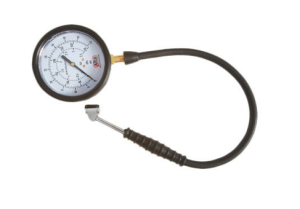
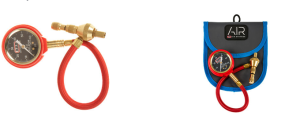
At Multiline Motors, we stock the tools you need to manage tyre pressure correctly.
For Deflating (Lowering Pressure)
| Product | What It Does | Best For |
|---|---|---|
| ARB E-Z Tyre Deflator | Removes valve core for rapid deflation. Accurate pressure reading via sliding valve. | Serious off-roaders who deflate frequently |
| ARB E-Z Deflator Digital Gauge | Same rapid deflation + digital accuracy (+/-1 PSI) | Drivers who want precise pressure |
Why use a proper deflator? Using a key or stick to press the valve pin is slow and inaccurate. A proper deflator removes the valve core – air rushes out in seconds, and you can read the pressure without reattaching a gauge.
For Inflating (Raising Pressure)
| Product | What It Does | Best For |
|---|---|---|
| ARB Digital Tyre Inflator | Large digital display, thumb-operated inflator button, easy deflator bleed button | Anyone who inflates tyres regularly |
| 2500W Inverter Generator | Powers an air compressor at camp or remote locations | Overlanders, Safari Rally campers |
Pro tip: Pair the ARB Digital Inflator with a portable air compressor (sold separately) for fast, accurate reinflation.
For Measuring Pressure
| Product | What It Does | Best For |
|---|---|---|
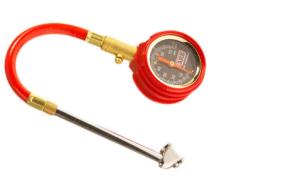
| ARB Air Pressure Gauge | Standard gauge with flexible hose, dual chuck, protective rubber guard | Daily drivers, basic pressure checks |
| ARB Low Air Pressure Gauge | Lower scale for better accuracy at 0-30 PSI | Off-road drivers who run low pressures (sand, mud) |
Why two gauges? A standard gauge is accurate at 30-50 PSI but less accurate below 15 PSI. The low-pressure gauge is designed for the pressures you use off-road.
For Puncture Repair
| Product | What It Does | Best For |
|---|---|---|
| Speedy Seal Puncture Repair Kit | Repairs tubeless tyres without removing the tyre from the vehicle or rim. Includes insertion needle, reamer tool, and tyre gauge. | Every 4×4 should carry one |
When to use: Small punctures (nail, screw, thorn) in the tread area. Does not work for sidewall punctures or large gashes.
Browse our full range of Air Systems products for all your tyre management needs.
Step-by-Step: How to Deflate for Sand (Lamu, Turkana)
-
Check your starting pressure – use your ARB Air Pressure Gauge
-
Attach the ARB E-Z Deflator to the valve stem
-
Slide the valve to open – air rushes out
-
Watch the gauge (or digital readout) until you reach your target pressure
-
Sand target: 15-18 PSI
-
-
Close the valve and remove the deflator
-
Repeat for all 4 tyres (and spare if you want to be thorough)
-
Drive on sand – you will feel the difference immediately. The vehicle will float instead of dig.
For more overlanding tips, check out our Safari Rally 4×4 Preparation guide.
Step-by-Step: How to Reinflate for Tarmac
-
Attach your ARB Digital Tyre Inflator to the valve stem
-
Connect the inflator to an air source:
-
Portable 12V compressor
-
Air tank
-
2500W Inverter Generator + compressor
-
-
Set your target pressure – 35-40 PSI for empty highway driving
-
Press the inflator button – watch the digital display
-
Stop at your target – the ARB Inflator is accurate to +/-1 PSI
-
Repeat for all 4 tyres
-
Drive on tarmac with confidence – no risk of overheating or blowouts
For tyre safety standards and regulations, visit the Kenya Bureau of Standards (KEBS) website.
Tyre Puncture Repair – What to Do on the Trail
You are 100km from Nairobi on a murram road. Your tyre pressure monitoring system shows a slow leak. What do you do?
-
Stop immediately – driving on a flat tyre destroys the sidewall
-
Locate the puncture – listen for hissing, or use soapy water to find bubbles
-
If the puncture is in the tread area (not sidewall):
-
Use your Speedy Seal Puncture Repair Kit
-
Ream the hole to clean it
-
Insert the repair plug
-
Reinflate using your ARB Digital Inflator
-
-
If the puncture is in the sidewall – a plug will not work. Fit your spare tyre.
-
Get the tyre properly repaired at a tyre shop as soon as possible. The plug is a temporary fix.
Carry in your vehicle: Speedy Seal Kit, ARB Digital Inflator, and a way to inflate (compressor or 2500W generator + compressor).
Frequently Asked Questions
Q: How often should I check my tyre pressure?
A: At least once a month. And before any long trip or off-road adventure.
Q: Can I use a petrol station air pump for my off-road tyres?
A: Yes, but their gauges are often inaccurate. Use your own ARB Digital Inflator or Air Pressure Gauge for accuracy.
Q: What is the best pressure for driving on murram roads in Kenya?
A: Start at 30-35 PSI. If the corrugations are shaking your vehicle apart, drop to 28 PSI.
Q: Do I need to deflate for rocky roads (Kajiado, Marsabit)?
A: Yes. 28-32 PSI allows the tyre to wrap around sharp rocks, reducing punctures. Higher pressure makes the tyre rigid, so rocks can cut or puncture it.
Q: How low can I go on sand?
A: 15-18 PSI is safe for most vehicles. Experienced drivers go down to 12 PSI, but you risk debeading the tyre (it comes off the rim). Never go below 12 PSI.
Q: Can I drive on the highway at 15 PSI?
A: Absolutely not. Low pressure on tarmac generates extreme heat. Within a few kilometers, the tyre can delaminate or blow out. Always reinflate before hitting tarmac.
Q: How accurate is the ARB E-Z Deflator Digital Gauge?
A: +/- 1 PSI between 15-75 PSI. Very accurate.
Q: Why do I need a low-pressure gauge?
A: Standard gauges lose accuracy below 15 PSI. If you drive on sand frequently (Lamu, Turkana), the Low Air Pressure Gauge gives you accurate readings at the pressures you actually use.
Where to Buy Air System Tools in Nairobi
At Multiline Motors Limited, we stock the full ARB air system range and the Speedy Seal Puncture Repair Kit.
What we offer:
-
ARB E-Z Tyre Deflator (standard and digital)
-
ARB Digital Tyre Inflator
-
ARB Air Pressure Gauge (standard and low-pressure)
-
Speedy Seal Puncture Repair Kit Series II
-
2500W Inverter Generator
Why buy from Multiline Motors:
-
Genuine ARB products – no counterfeits
-
Expert advice on which tools you actually need
-
We use this gear ourselves on Kenyan tracks
Contact us:
-
Phone: +254 722 830 802
-
Email: info@multilinemotorsltd.com
-
Location: Baba Dogo Road, Nairobi
Visit our Contact page for directions and opening hours.
For more information on ARB products, visit the official ARB website.
Final Verdict
Tyre pressure is not set-and-forget. It is a tool you use to match the terrain.
-
High pressure for tarmac, fuel economy, and heavy loads
-
Low pressure for sand, mud, and rocky trails
-
Accurate gauges to know exactly where you are
-
Repair kit for when punctures happen
Invest in quality deflators, inflators, and gauges – and use them. Your tyres will last longer, your vehicle will perform better, and you will get stuck less often.
Visit Multiline Motors on Baba Dogo Road to see the ARB air system range in person.
Also check out our Tyre Guides section for more helpful articles.