You turn the key in the morning. The engine cranks slowly. Then – click, click, click. Nothing.
A dead battery is the most common roadside emergency in Nairobi. And it almost always happens at the worst possible time: Monday morning, late at night, or just as you are about to leave for a road trip upcountry.
The good news? Most battery failures give you warning signs days or even weeks before they leave you stranded. You just need to know what to look for.
For a complete guide on upgrading your electrical system, read our Dual Battery System Kenya guide.
In this guide, we cover the 7 signs your car battery is dying, how to test it yourself, simple maintenance tips, and where to buy a quality replacement battery in Nairobi when the time comes.
Table of Contents
-
How a Car Battery Works
-
7 Signs Your Battery Is Failing
-
How to Test Your Battery with a Multimeter
-
Cleaning Corroded Terminals – DIY Guide
-
What Short Trips Do to Your Battery
-
When to Replace vs Recharge
-
Best Car Batteries in Kenya
-
Where to Buy in Nairobi
-
Frequently Asked Questions
-
Final Verdict
How a Car Battery Works
A car battery has one main job: deliver a powerful burst of electricity to start the engine. Once the engine is running, the alternator takes over – powering your lights, radio, air conditioning, and recharging the battery for the next start.
Most car batteries in Kenya are lead-acid or AGM (Absorbent Glass Mat). They store energy chemically and release it when you turn the key.
But batteries do not last forever. Heat, vibration, and frequent draining all shorten their lifespan. On Kenyan roads – with potholes, dust, and heavy traffic – batteries wear out faster than in most other countries.
A typical car battery in Kenya lasts 3 to 5 years. After that, you are on borrowed time.
For general vehicle safety standards, visit the NTSA Kenya website.
7 Signs Your Battery Is Failing
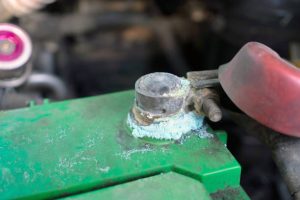
Do not wait until you are stuck on the side of the road. Watch for these warning signs.
1. Slow Engine Crank
When you turn the key, the engine normally starts immediately. If it cranks slowly – like the engine is tired – your battery is losing its ability to deliver full power.
2. Dim Headlights and Interior Lights
With the engine off, turn on your headlights. Are they noticeably dim? Do they get brighter when you rev the engine? Dim lights at idle suggest a weak battery or a failing alternator.
3. Clicking Noise When Turning the Key
A rapid clicking sound (often described as “click-click-click”) means the battery has enough power for the solenoid but not enough to turn the starter motor. This is a classic sign of a dead or dying battery.
4. Swollen or Bulging Battery Case
Heat is the enemy of car batteries. Under the bonnet of a car stuck in Nairobi traffic, temperatures can get extremely high. This heat can cause the battery case to swell or bulge. If your battery looks misshapen, replace it immediately – a swollen battery can leak acid or even explode.
5. Rotten Egg Smell
A battery that is overcharging or leaking internal acid will produce a distinct rotten egg smell (sulfur). If you smell this near your battery, there is a serious problem. Do not ignore it.
6. Old Age – Over 3 Years
Even if your battery seems fine, if it is more than 3 years old, you are at high risk of a sudden failure. In Kenya’s hot climate, 4 years is the maximum most batteries last. After 5 years, failure is almost guaranteed.
7. Corrosion on Terminals
Pop the bonnet and look at the battery terminals (the metal posts where cables connect). Do you see white, green, or blue powdery buildup? That is corrosion. While you can clean it (see section 4 below), heavy corrosion can prevent the battery from charging properly.
If you notice two or more of these signs, start shopping for a new battery. Do not wait until you are stranded.
For more warning signs related to your vehicle, see our Safari Rally 4×4 Preparation guide.
How to Test Your Battery with a Multimeter
A multimeter is a cheap tool (KES 1,500 – 4,000 at any electronics shop in Nairobi) that measures voltage. It is the most reliable way to check your battery’s health.
Step-by-step:
-
Set your multimeter to DC Voltage (20V range)
-
Touch the red probe to the positive (+) terminal
-
Touch the black probe to the negative (-) terminal
-
Read the voltage with the engine off
What the numbers mean:
| Voltage Reading | Battery Condition |
|---|---|
| 12.6V or higher | Fully charged – good |
| 12.4V – 12.5V | Partially charged – recharge soon |
| 12.0V – 12.3V | Low – recharge immediately |
| Below 12.0V | Dead – likely needs replacement |
Test while cranking (optional):
Have someone start the engine while you watch the multimeter. The voltage should not drop below 9.6V during cranking. If it drops lower, the battery is weak.
A healthy battery reads 12.6V or higher with the engine off. Anything below 12.4V means your battery is struggling.
Cleaning Corroded Terminals – DIY Guide
Corrosion on battery terminals looks like white, green, or blue powder. It acts as an insulator, preventing proper electrical flow. The good news? It is easy to clean.
What you need:
-
Baking soda (household brand – available in any supermarket)
-
Water
-
An old toothbrush or wire brush
-
Petroleum jelly or terminal grease
Steps:
-
Safety first: Wear gloves and eye protection. Battery acid can burn skin.
-
Disconnect cables: Always remove the negative (-) black cable first, then the positive (+) red cable.
-
Mix cleaning solution: Combine 1 tablespoon of baking soda with 1 cup of water.
-
Scrub terminals: Dip the toothbrush in the solution and scrub the terminals and cable ends until the corrosion is gone.
-
Rinse and dry: Wipe with a clean, damp cloth. Dry thoroughly.
-
Apply protectant: Smear a thin layer of petroleum jelly on the terminals to prevent future corrosion.
-
Reconnect cables: Positive (+) red cable first, then negative (-) black cable.
Do this every 6 months, and your battery terminals will stay clean and your electrical system will work properly.
For tyre maintenance tips, check out our Tyre Pressure Guide for Kenya.
What Short Trips Do to Your Battery
Nairobi drivers are famous for short trips: home to supermarket, supermarket to school, school to office. Each trip is 10-15 minutes in traffic.
Here is the problem: Starting your engine uses a large burst of battery power. The alternator then needs 20-30 minutes of driving to fully recharge what was used.
When you only drive short distances, your battery never fully recharges. Over weeks and months, it slowly drains lower and lower – until one morning, it does not have enough power to start the car.
Solution for Nairobi commuters:
-
Once a week, take a longer drive (30+ minutes) – even just a loop on the Southern Bypass
-
Or invest in a smart battery charger (KES 3,000 – 8,000) and charge your battery at home once a month
For more driving tips in Nairobi traffic, refer to AA Kenya driving advice.
When to Replace vs Recharge
Not every dead battery needs to be replaced. Sometimes it just needs a recharge.
| Situation | Action |
|---|---|
| Battery is under 3 years old, voltage reads 12.0V – 12.4V | Recharge (drive for 1 hour or use a charger). Then retest. |
| Battery is under 3 years old, voltage reads below 12.0V | Recharge fully. If it drops again within a week, replace. |
| Battery is over 4 years old, any sign of weakness | Replace. Do not waste money trying to revive an old battery. |
| Swollen case or rotten egg smell | Replace immediately – dangerous to keep using. |
Pro tip: Most battery shops in Nairobi (including Multiline Motors) will test your battery for free. Just drive in and ask.
Best Car Batteries in Kenya
When it is time to replace, here are the most reliable battery types available in Nairobi.
| Brand / Type | Lifespan | Best For | Price Range (KES) |
|---|---|---|---|
| Lead-Acid (Maintenance required) | 2 – 3 years | Budget buyers, older vehicles | 8,000 – 15,000 |
| Maintenance-Free (Calcium) | 3 – 4 years | Daily drivers, no maintenance needed | 12,000 – 20,000 |
| AGM (Absorbent Glass Mat) | 4 – 6 years | Vehicles with start-stop systems, 4×4s, heavy electrical loads | 18,000 – 30,000 |
| EFB (Enhanced Flooded Battery) | 4 – 5 years | Vehicles with basic start-stop | 15,000 – 25,000 |
Our recommendation for most Kenyan drivers:
-
Daily commuter in Nairobi: Maintenance-Free Calcium battery – reliable, no fuss, good value.
-
4×4 owner with winch, lights, fridge: AGM battery – handles deep cycling much better.
-
Budget conscious: Lead-acid works, but check water levels monthly.
For battery recycling and disposal guidelines, visit the Kenya Bureau of Standards (KEBS).
Battery Maintenance by Kenyan Region
Different parts of Kenya put different stresses on car batteries.
For Nairobi and Central Kenya:
Stop-start traffic and short trips are the main problems. Batteries slowly discharge and never fully recover. Solution: Monthly long drives or a battery charger at home.
For Coastal Region (Mombasa, Kilifi, Lamu):
High humidity and salt air corrode terminals quickly. Solution: Clean terminals every 2-3 months and apply petroleum jelly.
For Northern Kenya (Turkana, Marsabit, Isiolo):
Extreme heat cooks batteries from the inside. An AGM battery handles heat better than standard lead-acid. Also carry jumper cables – help is far away.
For High Altitude (Nyeri, Nanyuki, Aberdares):
Cold nights reduce battery capacity. If your battery is already weak, cold weather will expose it. Solution: Replace before the cold season if your battery is over 3 years old.
For overlanding trips to these regions, see our Roof Top Tent vs Ground Tent guide for camping gear recommendations.
Where to Buy a Quality Battery in Nairobi
At Multiline Motors Limited, we stock a full range of car batteries for all vehicle types.
What we offer:
-
Maintenance-free calcium batteries for daily drivers
-
AGM batteries for 4×4s, SUVs, and vehicles with start-stop systems
-
Heavy-duty batteries for trucks and commercial vehicles
-
Professional battery testing (free)
-
Expert fitting and disposal of your old battery
Why choose Multiline Motors:
-
Genuine batteries – no counterfeits
-
Competitive prices
-
Warranties on all batteries
-
One-stop shop – batteries, tyres, camping gear, and repairs
Contact us:
-
Phone: +254 722 830 802
-
Email: info@multilinemotorsltd.com
-
Location: Baba Dogo Road, Nairobi
-
Website: https://multilinemotors.com
Pro tip: Call before you visit. Tell us your car model and year. We will confirm we have the right battery in stock and set it aside for you.
Visit our Contact page for directions and opening hours.
Frequently Asked Questions
Q: How long should a car battery last in Kenya?
A: 3 to 5 years is typical. In hot regions like Turkana or during Nairobi traffic jams, expect closer to 3 years. In cooler areas like Nanyuki, you might get 4-5 years.
Q: Can a completely dead battery be recharged?
A: Sometimes. If the battery is less than 3 years old and the voltage is above 10V, a slow charge (6-12 hours) may revive it. If the voltage is below 10V or the battery is swollen, replace it.
Q: How do I know if it is the battery or the alternator?
A: Jump-start the car. Once running, remove the jumper cables. If the car dies immediately, the alternator is likely the problem. If it keeps running but dies later, the battery is likely the problem.
Q: Does driving fast charge the battery faster?
A: No. The alternator charges based on engine RPM, not road speed. Even idling, the alternator produces enough voltage to charge. But driving for longer periods (30+ minutes) is what matters.
Q: Can extreme heat damage my car battery?
A: Yes. Heat is actually worse for batteries than cold. High temperatures accelerate internal corrosion and evaporate water in lead-acid batteries. This is why batteries in Kenya often fail faster than in Europe.
Q: How often should I check my battery?
A: Every 3 months. Check terminal corrosion, look for swelling, and if you have a multimeter, test voltage. Before any long trip, always check.
Q: Are XBRI batteries available in Kenya?
A: XBRI is primarily known for tyres. For batteries, Multiline Motors stocks maintenance-free and AGM batteries from trusted manufacturers suited for Kenyan conditions.
Final Verdict
Your car battery is easy to ignore – until it fails. Then it becomes the most important thing in your world.
The signs of a dying battery are clear: slow cranking, dim lights, corrosion, swelling, or simply old age. Do not ignore them.
A few minutes of checking every few months can save you from being stranded on a Monday morning or stuck in a remote area with no help.
If your battery is over 3 years old or showing any warning signs, replace it before it fails. The cost of a new battery (KES 8,000 – 25,000) is far less than the cost of a tow truck, a missed flight, or a ruined road trip.
For more vehicle maintenance guides, check out our Tyre Pressure Guide for Kenya and Dual Battery System Kenya guide.
Visit Multiline Motors Kenya Limited on Baba Dogo Road, Nairobi, or call +254 722 830 802 for a free battery test and expert advice.
For official vehicle safety standards, visit the NTSA Kenya website.